US concludes latest Iran strikes as Trump says Hormuz remains open
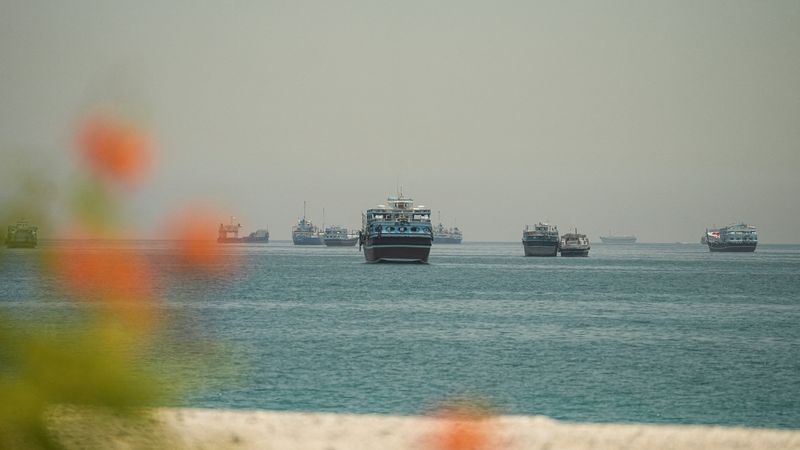
U.S. Central Command said on Sunday evening that it had concluded its latest strikes against Iran, following claims from President Donald Trump that the Strait of Hormuz remained open to commercial shipping.
Central Command (Centcom) said in a statement that it had hit dozens of targets in multiple locations across Iran, with the aggression aimed at hobbling Tehran’s ability to stage attacks in Hormuz.
Earlier on Sunday, Trump said the Strait of Hormuz remained open to commercial shipping, contrary to Iran’s claims that the key waterway was closed in response to recent U.S. aggression.
“U.S. Central Command (CENTCOM) completed a new wave of offensive strikes against Iran… to degrade Iran’s ability to continue attacking international shipping flowing through the Strait of Hormuz,” Centcom said in a statement.
The comments came after U.S. forces struck about 140 Iranian military targets on Saturday in response to an attack on the Cyprus-flagged container ship M/V GFS Galaxy, bringing Washington’s three-day campaign to more than 300 targets. Iran retaliated with strikes it said targeted U.S. and allied military facilities across the Gulf, while the United Arab Emirates said it intercepted Iranian missiles and drones.
The IRGC also said it disabled a second vessel in the Strait of Hormuz. Meanwhile, the United Arab Emirates said its air defenses intercepted Iranian missiles and drones, while warning sirens sounded in Bahrain and explosions were reported in Doha.
The latest military action came after Iran declared the Strait of Hormuz closed “until further notice” after vessels attempted to transit what it described as unauthorized routes. The IRGC warned the waterway would remain closed until “the end of U.S. interference in this region” and said any retaliation would be met with a “severe response.”
“Iran made a poor choice. Now they pay,” U.S. Defense Secretary Pete Hegseth said in a post on X.
Oil prices surged over 3% on Monday following the weekend developments, as markets braced for more supply disruptions in the Middle East. Marine Traffic data showed a small number of vessels currently transiting Hormuz.
Diplomatic efforts continued behind the scenes, with Iranian Foreign Minister Abbas Araghchi meeting Omani Foreign Minister Sayyid Badr Albusaidi in Muscat to discuss mechanisms for ensuring safe passage through the Strait of Hormuz. Oman said negotiations would continue at both the political and technical levels.
“The Islamic Republic of Iran maintains that future arrangements governing transit through the Strait of Hormuz should be developed through consultations between the two littoral states, taking into consideration the developments of recent months, particularly the imposed US-Zionist regime war and its security implications for navigation in the Strait of Hormuz,” Iran’s Foreign Ministry said on Sunday.
The latest exchange has further dimmed prospects for renewed negotiations between Washington and Tehran. Iran has accused the United States of violating the recent ceasefire agreement, with Araghchi warning that “there can only be mutual compliance.” Washington, meanwhile, continues to demand that Tehran guarantee safe passage for commercial shipping before broader talks can advance.