QFEX 2026: Final Recommendations for the Future of Finance, AI, Connectivity and the Intelligent Economy
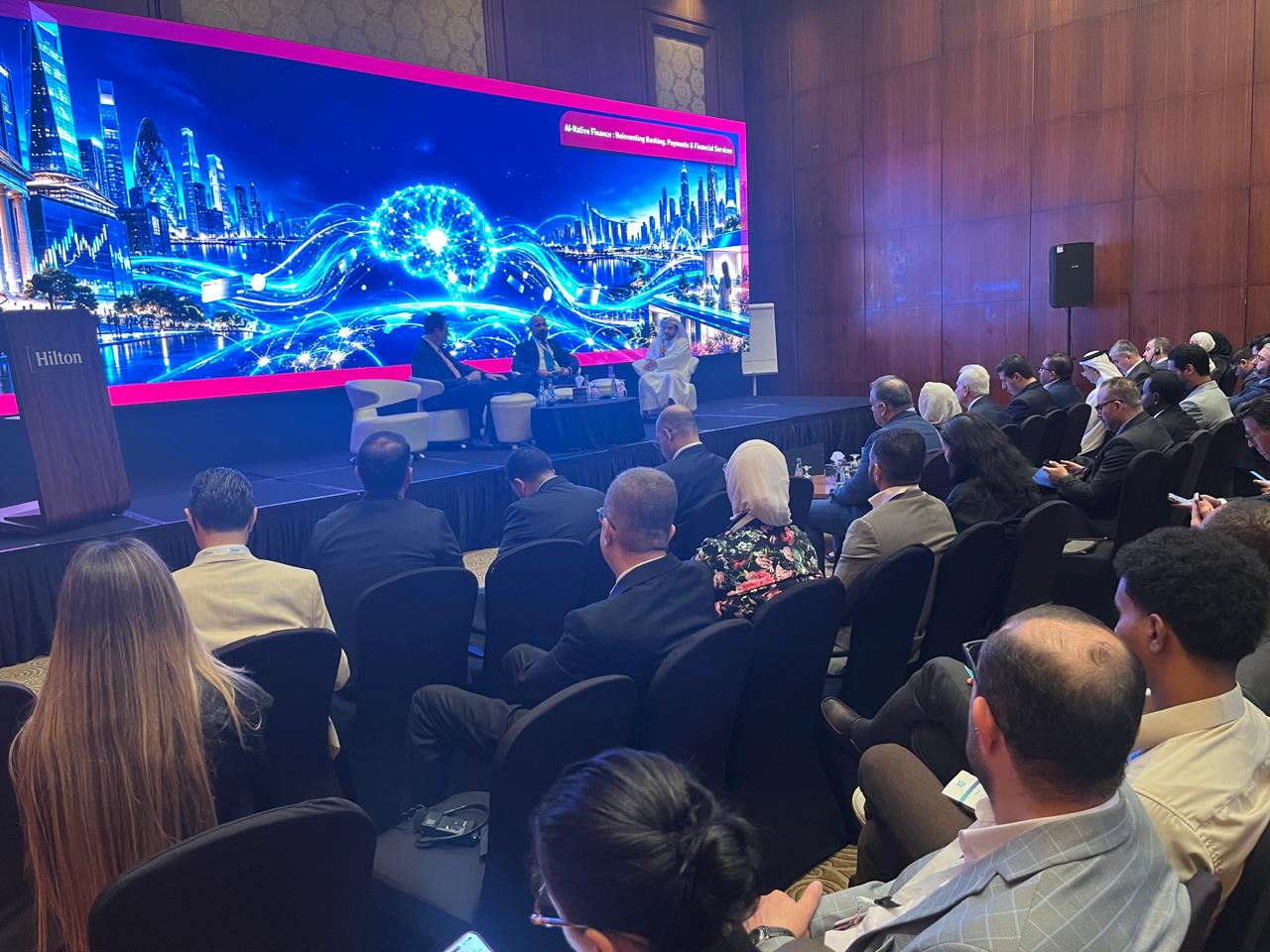
At the conclusion of the third edition of QFEX 2026, following two days of high-level discussions on the future of finance, investment, artificial intelligence, connectivity and the intelligent economy, the Summit concluded with a set of recommendations reflecting the need to move beyond simply adapting to technological transformation toward actively and responsibly shaping it.
These recommendations are grounded in a central message emphasized from the opening of QFEX 2026: artificial intelligence and technological progress offer extraordinary opportunities for economies and societies, but the speed of innovation must be matched by an equally strong capacity for governance, accountability and human oversight, ensuring that people remain the ultimate decision-makers within the systems they create.
1. Put Humanity at the Center of the Intelligent Economy
QFEX 2026 emphasizes that people must remain at the heart of technological transformation. The value of artificial intelligence should be measured not only by automation, efficiency or cost reduction, but by its ability to enhance human capabilities, improve quality of life and create new opportunities.
The Summit calls for moving beyond merely keeping a Human in the Loop toward ensuring meaningful Human Control, where final authority, responsibility and accountability remain with people.
2. Accelerate AI Governance Alongside AI Development
Governments, regulators and institutions should develop more agile and responsive governance frameworks capable of keeping pace with the accelerating development of artificial intelligence.
These frameworks should address accountability, transparency, privacy, data protection and risk management without turning regulation into an obstacle to responsible innovation.
This principle was central to the QFEX discussion on Trust & AI at Scale: Regulation, Responsible AI & the Autonomous Enterprise.
3. Move from Digital Finance to AI-Native Finance
Financial institutions, banks and FinTech companies should prepare for a new phase in which artificial intelligence becomes embedded within the architecture of financial services rather than functioning merely as an additional tool.
This transition includes payments, financing, risk analysis, customer experience and decision-making, while maintaining effective human oversight and regulatory accountability.
The objective should be to build financial ecosystems that are smarter, faster, more resilient and more inclusive.
4. Build the Infrastructure for an AI-Ready Economy
Competitiveness in the AI economy will depend on far more than algorithms. It will require the physical, digital and human infrastructure necessary to develop and deploy intelligent systems at scale.
QFEX 2026 therefore calls for increased investment in computing capacity, cloud infrastructure, data centers, connectivity, digital infrastructure and research capabilities, together with education and talent ecosystems capable of supporting an AI-ready economy.
5. Recognize Connectivity as a Foundation of the Intelligent Economy
Connectivity and digital networks should be treated as fundamental economic infrastructure rather than as a separate technology sector.
Advanced connectivity enables financial services, artificial intelligence, cloud computing, intelligent enterprises and future digital economies.
This reflects one of the central principles of QFEX 2026: the convergence of Finance, AI & Connectivity will be a defining force in shaping the next generation of economies.
6. Prepare Early for the Future of Work and Human-AI Collaboration
Governments, businesses and educational institutions should prepare for significant changes in employment and organizational structures resulting from digital employees, autonomous systems and hybrid Human-AI teams.
Priority should be given to reskilling, leadership development and strengthening distinctly human capabilities, while redesigning jobs and organizational models so that AI enhances human productivity rather than marginalizing the human role.
This was a central theme of the QFEX session AI, Jobs & the Human Future: Leadership, Talent & the Future of Work.
7. Strengthen Cybersecurity and Digital Trust
As financial services and institutions become increasingly intelligent and interconnected, cybersecurity, data governance, privacy and digital trust must be integrated into systems from the outset.
Trust should not be treated as a secondary outcome of digital transformation. It is a prerequisite for the adoption and scaling of intelligent technologies, particularly as AI moves from isolated applications toward enterprise-wide and increasingly autonomous systems.
8. Create Regulatory Environments that Enable Responsible Innovation
QFEX 2026 calls for stronger collaboration among regulators, financial institutions, technology companies, universities and research institutions.
Regulatory and experimental environments should enable new technologies and business models to be tested responsibly before large-scale deployment.
The objective is to achieve a practical balance between innovation and regulation, ensuring that regulation does not unnecessarily slow progress while technological development does not outpace society’s ability to govern it.
9. Move Digital Assets, Tokenization and Web3 from Speculation to Real Economic Utility
Building on the Summit’s discussion of Beyond Blockchain: Tokenization, Web3 & the Programmable Economy, QFEX 2026 recommends greater focus on practical and scalable applications of tokenization, blockchain and Web3 technologies.
The priority should be to build secure infrastructure and identify real-world financial and economic applications capable of creating sustainable value beyond speculation.
10. Direct Capital Toward Opportunities in the New Economy
Investors, financial institutions and venture capital firms should develop investment and risk-assessment models appropriate to artificial intelligence, digital infrastructure and emerging technologies.
The challenge is not simply to identify the next generation of growth opportunities, but to balance innovation and scalability with responsible capital allocation and effective risk management.
This reflects the discussions of The Future of Capital: AI, Digital Assets & the Next Investment Frontier.
11. Use Technology to Advance Financial Inclusion and Human Impact
Financial innovation should respond to genuine human needs.
QFEX 2026 calls for the use of digital platforms, intelligent solutions and financial technologies to broaden access to financial services, particularly for underserved communities.
The Summit also emphasizes the importance of connecting finance, philanthropy and social investment with sustainable and measurable development outcomes, reflecting the discussion in Finance with Purpose: Islamic Philanthropy, Financial Inclusion & Impact.
12. Support Startups and Connect Innovation with Capital and Global Markets
Entrepreneurs and startups should be given practical platforms through which they can access investors, expertise, strategic partnerships and international markets.
Conferences and business platforms should therefore evolve beyond dialogue and networking to become mechanisms for creating tangible investment and growth opportunities.
QFEX 2026 translated this principle into practice through the Startup World Cup – Qatar Regional Competition, providing a pathway to the global finals and an opportunity to compete for investment of up to USD 1 million.
13. Strengthen Partnerships Among Governments, Business, Academia and International Institutions
The scale and speed of the coming transformation exceed the capacity of any single sector to manage independently.
QFEX 2026 therefore calls for stronger partnerships among governments and regulators, financial institutions, technology and telecommunications companies, universities, research centers and international organizations.
Such partnerships should focus on translating knowledge and technological advancement into practical policies, investments and solutions that support economic growth while protecting human and societal interests.
14. Establish an Ongoing Dialogue on Humanity’s Future in the Age of AI
The future of artificial intelligence should not be discussed exclusively by technology companies and developers.
The conversation must include policymakers, economists, financial institutions, academics, international organizations, businesses and society at large.
The questions raised by AI are no longer purely technological. They are increasingly economic, regulatory, ethical and human — a central message of the QFEX 2026 opening address.
The Doha Message – QFEX 2026
The future of the economy will not be shaped by technology alone, but by the choices we make in how we use, govern and remain accountable for it.
Artificial intelligence presents extraordinary opportunities for humanity. Yet governments, institutions, businesses and societies have a shared responsibility to ensure that their capacity to govern technology does not fall behind the speed at which technology itself evolves.
From Doha, QFEX 2026 calls for an intelligent economy that brings together innovation and governance, technology and humanity, capital and responsibility, while ensuring that people remain the ultimate decision-makers, the holders of accountability and the primary beneficiaries of technological progress.
The Summit therefore brings back to the forefront the fundamental question raised at its opening:
> “Will humanity’s ability to govern, control and make decisions remain stronger than the intelligence it creates?”
From Doha, QFEX 2026 affirms that the answer to this question will not be determined by technological progress alone, but by what we choose to do today to prepare for it.