Why South Korea’s stock market represents the purest AI trade
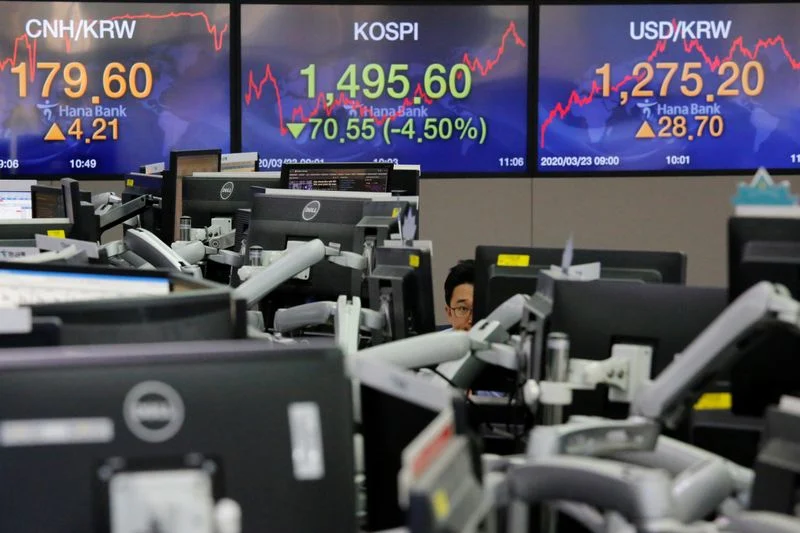
South Korea’s semiconductor boom has made its stock market one of the world’s most concentrated bets on artificial intelligence, according to Yardeni Research.
In an October 21 research note, Yardeni Research said South Korea has reshaped its economic growth model around AI more aggressively than any other major economy, linking exports, investment, corporate earnings and equity valuations to semiconductor demand.
Semiconductor exports surged 263% year-on-year in September, accounting for 41% of the country’s total exports.
Overall exports climbed 83.5% to a record $120.9 billion, marking their 16th consecutive monthly increase.
The boom, led by chipmakers Samsung Electronics and SK Hynix, has made semiconductors South Korea’s dominant export industry, overtaking traditional sectors including automobiles, shipbuilding and consumer electronics.
However, the concentration has also increased market vulnerability to changes in global AI investment.
South Korea’s Kospi index reached a record 9,385 in June before retreating to approximately 5,552. A further 3.7% decline on October 20 reduced its year-to-date gain to 32%.
The semiconductor boom also complicates monetary policy for the Bank of Korea, which must balance strong economic growth against persistent inflation.
September inflation stood at 2.9%, above the central bank’s 2% target, while second-quarter GDP expanded 3.8% year-on-year.
Yardeni said markets expected policymakers to maintain interest rates at 3%, following two quarter-point increases this year, although another hike in November remained possible.
The report warned that a sharp reversal in AI spending could significantly disrupt South Korea’s $2.25 trillion economy.
Michael Drury of McVean Trading & Investments identified Asia as a potential centre of any AI-driven market correction, with South Korea and Taiwan particularly exposed.
Meanwhile, President Lee Jae Myung’s proposed $1 trillion-plus public-private AI investment initiative aims to distribute the technology’s economic benefits across less prosperous regions.