Trump extends Iran ceasefire; United margins squeezed – what’s moving markets
Futures linked to the main U.S. stock indices edge up following U.S. President Donald Trump’s decision to extend a soon-to-expire ceasefire with Iran. Yet shipping disruptions through the Strait of Hormuz remain, keeping oil prices elevated above pre-war levels. Trump’s pick for Fed chair stresses the central bank’s independence during a grilling on Capitol Hill and a war-linked jump in fuel costs squeezes margins at United Airlines.
1. Futures rise
U.S. stock futures pointed higher on Wednesday, as investors weighed Trump’s declaration of an indefinite extension to the ceasefire with Iran against ongoing shipping disruptions in the Strait of Hormuz.
By 03:36 ET (07:36 GMT), the Dow futures contract had gained 285 points, or 0.6%, S&P 500 futures had risen by 45 points, or 0.6%, and Nasdaq 100 futures had added 218 points, or 0.8%.
Trump’s announcement came after the close of U.S. markets. On Tuesday, the main averages on Wall Street faded, finishing lower, as the uncertainty swirled around fresh negotiations between the U.S. and Iran.
But earnings remained a “bright spot” for stocks, analysts at Vital Knowledge said, noting that most of the major returns in the U.S. “either beat-and-reiterate or beat-and-raise.” Meanwhile, U.S. retail sales in March also outpaced expectations, although this was due to an Iran-linked energy shock sparking a sharp jump in gas station sales.
Traders have been keeping tabs on incoming results and data as they attempt to assess the impact of the war on American businesses and the wider economy.
Analysts have begun to suggest that, with stocks now broadly trading around pre-war levels, markets may be starting to believe that the peak of the geopolitical strife in the Middle East has come and gone.
2. Trump extends ceasefire
In a social media post, Trump said the ceasefire deal with Iran had been extended just hours before it was reportedly due to expire.
Trump claimed the move came at the request of Pakistan, a frequent mediator between Washington and Tehran, adding that the truce would be in effect “until such time as” Iranian officials present a “unified proposal” for peace.
But the extension was unveiled unilaterally by Trump, leaving the stance of both Iran and U.S.-ally Israel unclear.
An anticipated trip to Pakistan for a fresh round of negotiations with Iran by U.S. Vice President JD Vance was put on hold as well, following an announcement from Iranian state media that its delegation deemed the talks to be a “waste of time because the U.S. prevents reaching any suitable agreement.”
3. Oil choppy
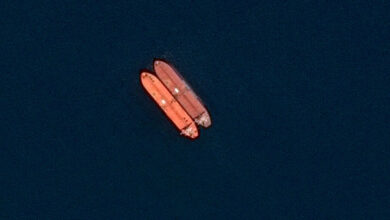
At the same time, an ongoing U.S. blockade of Iranian ports and coastline remains in place and tanker traffic through the vital Strait of Hormuz is still all but closed.
Disruptions in the narrow waterway off of Iran’s southern coast, through which roughly a fifth of the world’s oil passes, have sparked worries over an energy-powered inflation surge that could force central banks to hike interest rates.
Brent crude prices, the global oil benchmark, ticked up slightly to sit at around $98.95 a barrel and continues to hover well above pre-war levels. U.S. West Texas Intermediate crude futures, meanwhile, rose by 0.4% to $89.99 a barrel by 04:16 ET.
“Sentiment benefits from another extension of a Trump-imposed deadline on Iran, but high oil prices suggest markets seek more concrete steps forward,” said Michiel Tukker, Senior U.K. and Eurozone Rates Strategist at ING.
4. Warsh says no rate-cut promises made to Trump
Kevin Warsh, Trump’s nominee to be the next Federal Reserve chair, used his opening remarks at a Senate confirmation hearing on Tuesday to stress that, if confirmed to the role, he would ensure that the central bank’s policy remained “strictly independent.”
Later, when asked whether Trump had told him he would get the Fed job only if he committed to cut interest rates, Warsh said the president “never asks” him to “predetermine” or “fix” any interest rate decision.
“Markets had priced in no excess volatility ahead of yesterday’s Senate hearing […], and that proved to be the right call. Warsh was firm enough on Fed independence to prevent any Treasuries‑[U.S. dollar] sell‑off, while remaining sufficiently elusive on policy to avoid any impact on rate expectations,” analysts at ING said.
The hearing came amid recent concerns around the Fed’s independence. Trump on Tuesday told CNBC that he would be “disappointed” if the new Fed chair does not cut rates. The president has long advocated for lower interest rates to help boost the economy, and has entered into several high-profile spats with current Fed chair Jerome Powell over the issue.
Trump has frequently criticized Powell and mused about firing him. Meanwhile, the Department of Justice has opened an investigation into a Fed project involving the renovation of office buildings.
Powell in January, in an extraordinary move, said in a public statement that the DoJ probe and the “threat of criminal charges” was a “consequence of the Federal Reserve setting interest rates based on our best assessment of what will serve the public, rather than following the preferences of the President.”
5. United Airlines reports
United Airlines shares inched up in premarket U.S. trading, as relief around Trump’s ceasefire extension helped to dull the fallout from underwhelming second-quarter and annual profits.
Analysts cited by Reuters said although United’s weaker guidance was due largely to an uptick in fuel costs, its underlying performance, removing these expenses, was mostly in line with expectations.
Higher jet fuel prices stemming from the war have threatened to hit margins across the airline industry, even as travel demand has appeared to be robust.
United peer Delta Air Lines recently scrapped planned growth and Alaska Air withdrew its full-year guidance, while budget carriers such as Spirit Airlines are now under particular strain.