Brent posts worst week since April 2020 amid post-midterms hopes for Iran detente
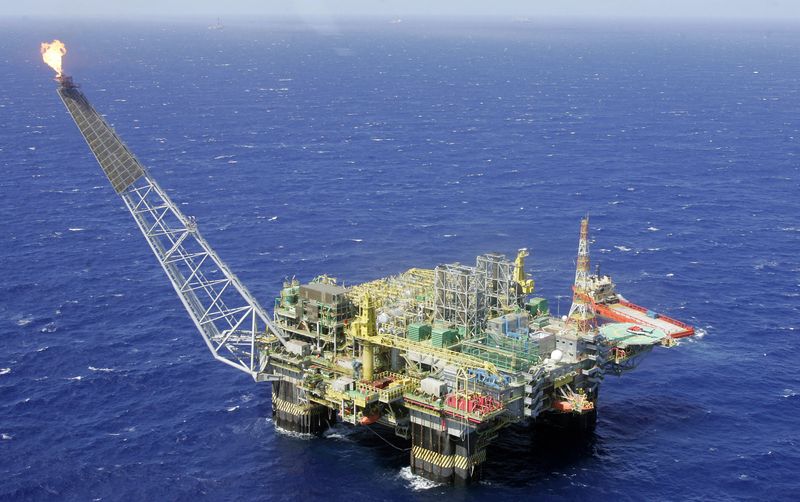
The global oil benchmark on Friday slumped nearly 17% for the week to post its worst weekly performance since late April 2020, as energy market participants assessed the implications of the Democratic midterm election victory on hopes for de-escalation between the U.S. and Iran.
Brent crude futures expiring in January dipped 0.6% to settle at $97.75 a barrel, while posting a 16.9% decline for the week. U.S. West Texas Intermediate crude futures expiring in December shed 0.2% to settle at $90.36 a barrel, falling 13.2% for the week for their steepest weekly loss since mid-April.
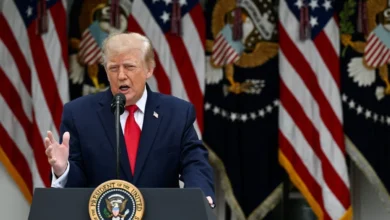
Traders have been gauging the implications of the decisive Democratic election win, which gave the party control over both chambers of Congress. Speculation has swirled around whether the Democrats will use their newfound influence to force Republican President Donald Trump to find a resolution to the Iran war.
“Although flips of the U.S. House and Senate had been broadly contemplated, heavy Democratic outperformance in the midterms forces a re-calibration of expectations with respect to the Iran War. In short, substantial majorities in each chamber of Congress increases costs to President Trump for continuing/escalating a broadly unpopular conflict,” Walt Chancellor, energy strategist at Macquarie, said.
“While Trump would maintain considerable executive latitude to strike Iran, given the new complexion of Congress and its intrinsic budgetary authorities, for Trump, the ability to sustain these efforts to achieve strategic goals falls, and the opportunity costs associated with any such action rises. In the very near term, the midterms may change behavior/incentives for the administration, but they do not eliminate Trump’s executive prerogatives for military action (subject to limitations),” he said.
“To bind Trump from further engaging Iran, ultimately, a veto-proof majority from both chambers of Congress would be required; a seemingly high bar. As such, we do not believe the political calendar itself should create any great urgency to strike Iran during the ’lame-duck’ Congressional session; that option would ostensibly still be available in the New Year,” Chancellor added.
A conclusion to the Middle East conflict, which began with a joint U.S.-Israeli assault on Iran in late February, could reopen critical shipping corridors in the Middle East. Recent shipping data have suggested that some oil supply flows out of the region are recovering partially due to naval security provided by the U.S. military, particularly in the Strait of Hormuz.
However, vessels remain alert to attacks in the vital waterway, through which about a fifth of the world’s oil and liquefied natural gas flowed before the war. Iran moved to cut off the strait shortly after the conflict began.
Reports of fresh attacks on tankers in the Persian Gulf and Strait of Hormuz pushed up prices on Thursday. Data from the United Kingdom Maritime Trade Operations Centre, a maritime monitoring group, indicated that attacks on oil-bearing ships were still happening at close to record levels.
On Friday, de-escalation hopes were also boosted by media reports that Trump had discussed mediation efforts with Qatar’s Emir, Tamim bin Hamad Al Thani.
Hovering in the background was an artificial intelligence-driven bloodbath in stock markets on Thursday triggered by fears that a Democrat-controlled Congress may support greater restrictions on the AI industry.