Nasdaq notches worst week since late June with a 4.5% slide as AI trade suffers
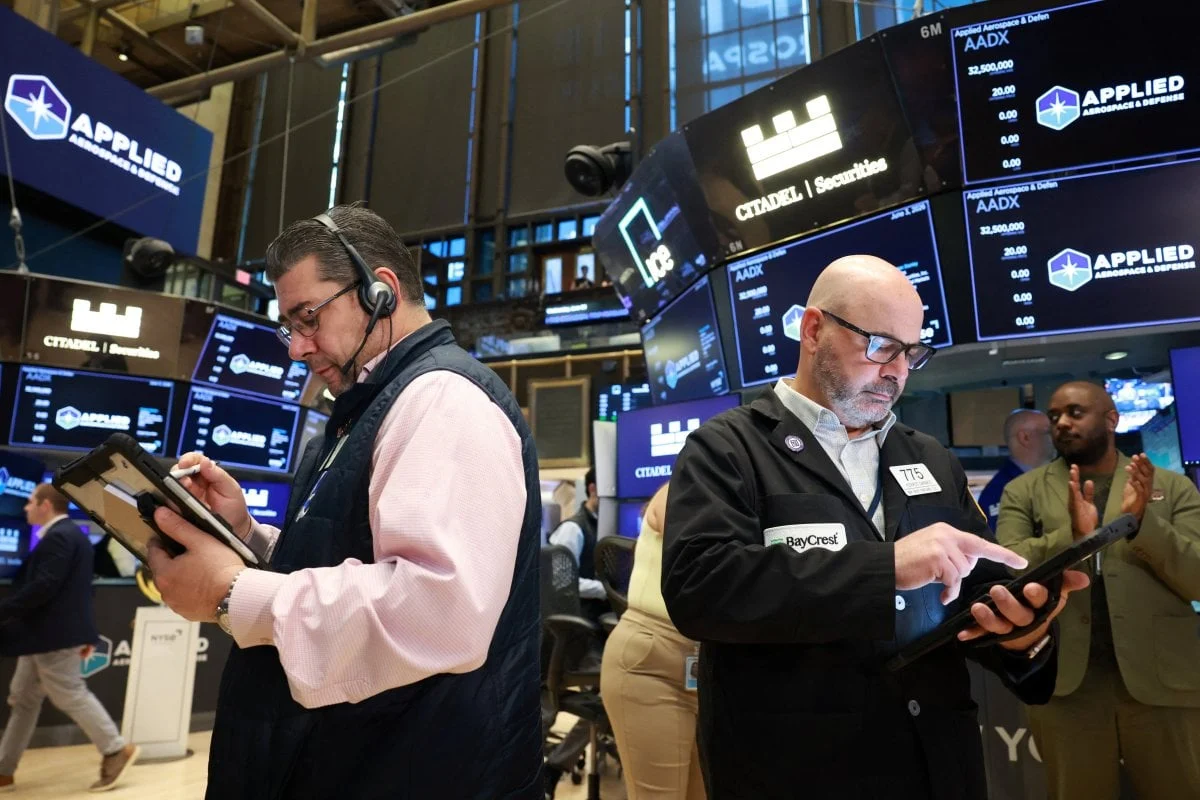
Wall Street ended lower on Friday, as technology stocks once again came under pressure from worries around the artificial intelligence trade. Those fears have dominated headlines over the past few sessions and have weighed on risk sentiment, resulting in the tech-heavy NASDAQ Composite posting its worst week since late June.
The mood was also clouded by a rise in oil prices. Meanwhile, Federal Reserve rate hike expectations took a hit after the central bank’s chief, Kevin Warsh, did not provide any signals on whether there would be monetary policy tightening later this month.
Investors are now looking ahead to the third quarter earnings season deluge over the next few weeks. A strong underlying earnings story has been one of the primary drivers of Wall Street reaching record levels this year and weathering headwinds from geopolitics to bond ructions.
The benchmark S&P 500 slipped 1.1% to close at 7,659.11 points, while the blue-chip Dow Jones Industrial Average erased gains, falling 0.6% to settle at 52,001.52 points. The NASDAQ cratered 2.2% to conclude at 26,140.03 points.
For the week, the S&P and NASDAQ slid 2% and 4.5%, respectively. The Dow rose 0.7%.
“Earnings are important, but the market is concerned that 2026 will mark the peak for earnings growth. It has been a strong run for the earnings cycle, but the key drivers of earnings growth are Nvidia, Micron Technology and Google, which are expected to account for approximately one-third of this year’s earnings growth. Hot inflation data suggests interest rates will remain higher for longer, and investors are repositioning defensively,” Michael O’Rourke, chief market strategist at Jones Trading, told Investing.com.
AI names take a hit, from memory stocks to semiconductors
It’s been a tough week for the S&P 500 technology sector, as the AI trade suffered from a combination of jitters over Chinese competition and soaring concerns around the massive amounts of debt being issued by companies to fund their AI infrastructure buildouts.
The selling began at the start of the week after memory stocks came under pressure due to reports of advances made by China’s ChangXin Memory Technologies. Shares of the three biggest memory chipmakers, U.S. firm Micron and South Korea’s Samsung Electronics and SK Hynix, logged weekly losses of 14.6%, 17.8%, and 24.3%, respectively.
Stocks of so-called neocloud companies have also seen a notable decline. These specialized cloud-computing providers focus on renting out graphics processing unit (GPU) power for AI training and inference. The fall was partly due to a Gartner report which predicted that by 2030, 80% of neocloud providers were expected to cease independent operations.
CoreWeave has also seen a rout in its bonds, with some of them having tumbled to new lows in secondary markets. The slide prompted Jensen Huang, the top boss of Nvidia – CoreWeave’s second-largest shareholder – to express confidence in the neocloud’s financial position, saying that it did not need a backstop. CoreWeave and peer Nebius dropped 25.2% this week.
Chip stocks, which have been one of the biggest beneficiaries of the AI boom, also notched a steep weekly loss, with the Philadelphia Semiconductor Index slumping 11.4%. This was the gauge’s worst weekly performance since early April 2025.